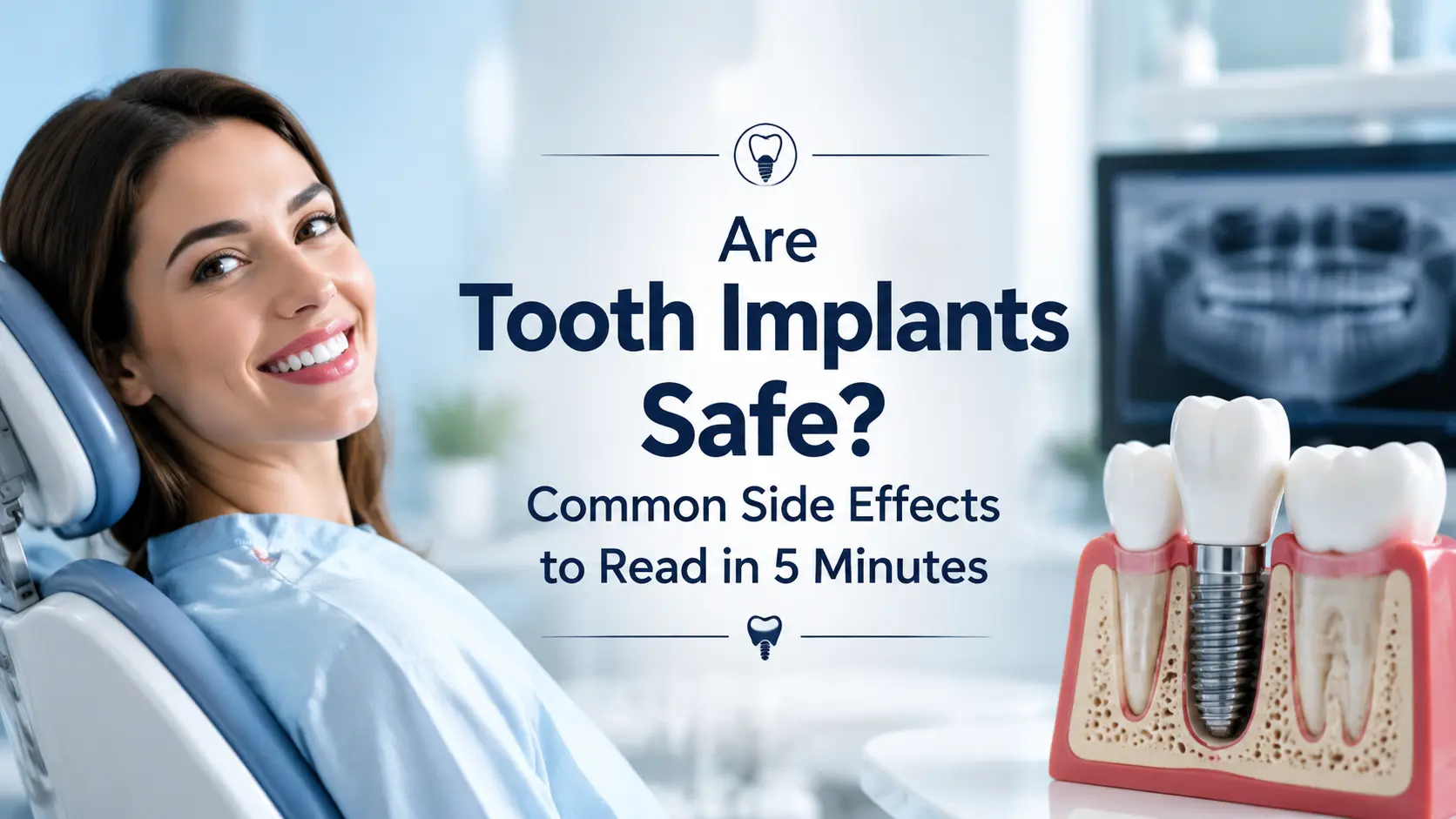
If you are wondering whether tooth implants are safe, the short answer is yes, for most healthy adults, they are considered a safe and predictable tooth replacement option when treatment is carefully planned and properly maintained. Most side effects are mild and temporary, such as soreness, swelling, and light bleeding. The key is knowing what is normal, what is not, and how to lower your risk before treatment even begins. If you are researching Dental Implants, this guide will help you make a confident, informed decision.
Are Tooth Implants Safe? Here’s the Honest Answer
Tooth implants are widely used because they replace the missing tooth root as well as the visible tooth, creating a stable foundation for a crown, bridge, or denture. The implant post is usually made from biocompatible titanium, which can fuse with the jawbone through a process called osseointegration. That bond is one reason implants are trusted as a long-term solution for missing teeth. According to Your Smile Town Dental, clinical studies show success rates around 95% to 98% after 10 years, and many implants can last 25 years or longer with proper care.
The FDA also notes that dental implants can restore chewing ability, improve appearance, help preserve the jawbone, and support overall quality of life. That said, “safe” does not mean “risk-free.” Like any surgical procedure, implants can come with short-term side effects and, in some cases, longer-term complications that need attention.
Why Dental Implants Are Considered a Strong Long-Term Option
One reason implants are so highly recommended is that they function more like natural teeth than many other replacement options. Your Smile Town Dental describes the implant process as a complete tooth replacement system, from root to crown, which helps support bite strength and everyday comfort. The page also explains that most patients can expect a treatment timeline of roughly 3 to 6 months, depending on healing, bone quality, and whether extra procedures like bone grafting are needed.
Another important safety advantage is planning. A strong implant outcome depends on careful diagnosis, review of gum health, bone density, medical history, and healing factors such as smoking or uncontrolled diabetes. Your Smile Town Dental highlights comprehensive evaluation and 3D imaging as part of treatment planning, which helps reduce surgical surprises and improve implant positioning.
Common Side Effects Most Patients Can Expect
Most people do not experience dangerous complications after implant placement. Instead, they notice normal healing symptoms that gradually improve over days or weeks.
Mild Pain and Tenderness Are Usually Temporary
Some soreness after implant surgery is expected once the anesthesia wears off. In most cases, the discomfort feels similar to what many patients experience after an extraction and can often be managed with over-the-counter medication or dentist-prescribed pain relief. Your Smile Town Dental notes that many patients return to normal activities within 24 to 48 hours.
Swelling and Bruising Can Peak Early
Swelling around the gums, jaw, or face is one of the most common early side effects. The American Academy of Implant Dentistry explains that swelling, slight bruising, pain at the implant site, and minor bleeding are all normal during the healing period after surgery. These symptoms usually improve rather than worsen as the first few days pass.
Light Bleeding Can Happen at First
Minor bleeding or oozing is common shortly after the procedure. This is usually not a sign of a problem if it decreases as healing begins. However, bleeding that becomes heavier or lasts longer than expected should be checked by a dental professional.
Eating and Speaking May Feel Different for a Few Days
Because the area is tender and healing, many patients need to stick with softer foods for a short time. Depending on where the implant was placed, chewing and speech may feel slightly different at first, especially if a temporary restoration is involved. That adjustment period is normal and usually improves as the tissues settle.
Serious Side Effects You Should Never Ignore
While most healing is straightforward, some problems deserve prompt attention. This is where many low-quality blogs stop too early. A better answer is not just “implants are safe,” but “implants are safe when warning signs are recognized early.”
Infection Around the Implant Site
Infection can develop in the gum or bone supporting the implant. The FDA lists local infection as one reason an implant may fail, and poor cleaning around the implant can increase the risk over time. If the area becomes more painful, more swollen, or harder to keep clean instead of steadily improving, call your dentist.
Persistent Numbness or Tingling
Nerve-related symptoms are uncommon, but they matter. The FDA includes post-surgical numbness from nerve impingement or damage as a known implant risk. If numbness in the lip, chin, gums, or tongue does not improve, it should be evaluated quickly.
Sinus Problems With Upper-Jaw Implants
Upper-jaw implants require careful placement because of their proximity to the sinus area. The FDA notes that sinus perforation can occur during surgery, which is why proper imaging and planning are so important before implant placement.
Loosening or Implant Failure
A dental implant should not feel loose. If it does, that may point to poor integration with the bone, bite-related stress, infection, or another mechanical issue. The FDA specifically advises patients to contact their dental provider right away if an implant feels loose or painful.
Peri-Implantitis: The Overlooked Long-Term Risk
One of the most important long-term risks is peri-implantitis, an inflammatory condition that affects the tissues and bone around an implant. The American Academy of Periodontology explains that bacteria can collect around the base of an implant below the gum line, leading first to inflammation and, if untreated, bone loss. Common signs include red or tender gums around the implant and bleeding when brushing.
This is also where tooth implant side effects become more than just a short-term recovery issue. Early inflammation may be reversible, but once bone support starts breaking down, treatment becomes more complex. That is why routine cleanings, home care, and follow-up visits matter just as much as the surgery itself.
Who Has a Higher Risk of Implant Complications?
Not every patient starts with the same level of risk. The FDA says overall health, healing ability, and habits such as smoking can affect how well an implant heals and how long it stays stable. Smoking is especially important because it can reduce long-term success.
Your Smile Town Dental also notes that good candidates generally have healthy gums, adequate bone density, a commitment to oral hygiene, and reasonably good general health. Conditions like uncontrolled diabetes, active periodontal disease, or severe bone loss may require added planning or treatment first. In some cases, bone grafting can help rebuild support and expand candidacy.
Smart Ways to Reduce Side Effects and Heal Better
The best way to make implants safer is to lower risk before and after surgery. Following aftercare instructions closely, keeping the area clean, attending regular follow-ups, and avoiding tobacco all improve the odds of smooth healing. The FDA and AAID both stress that oral hygiene and professional monitoring are essential for long-term implant success.
For patients in Sanford, it is also helpful to know that Your Smile Town Dental describes a step-by-step implant process that includes consultation, imaging, surgical placement, healing, abutment placement, and final restoration. That staged approach matters because implant safety is not just about the day of surgery. It is about planning, healing, and maintenance working together.
When Should You Call a Dentist Right Away?
Call your dentist promptly if the implant feels loose, pain increases instead of improving, numbness lingers, the gums bleed repeatedly around the implant, or the site becomes difficult to keep clean. These signs do not always mean the implant has failed, but they do mean the area should be checked before a small problem becomes a bigger one.
FAQs
1. Are tooth implants safe for most adults?
Yes. For most healthy adults with good gum health and enough jawbone support, tooth implants are considered a safe and reliable treatment option when placed and maintained properly.
2. How long do dental implant side effects last?
Mild soreness, swelling, bruising, and light bleeding usually improve within the first several days, while full healing and bone integration can take several months.
3. What is the biggest long-term risk after implant surgery?
One of the biggest long-term risks is peri-implantitis, which is inflammation and bone loss around the implant caused by bacterial buildup and inadequate maintenance.
4. Can smokers still get implants?
Some smokers can still qualify, but smoking raises the risk of healing problems and implant failure. Quitting or reducing tobacco use before and after surgery can improve results.
Conclusion
So, are tooth implants safe? In most cases, yes. They are one of the most trusted modern solutions for replacing missing teeth, especially when the procedure is carefully planned, the patient is a good candidate, and long-term maintenance is taken seriously. Most side effects are short-lived and manageable, while serious complications are less common and often easier to treat when caught early. If you are considering Dental Implants, the smartest move is to understand both the benefits and the warning signs before treatment starts.