We all want a bright, beautiful smile. Yet despite diligent brushing and flossing, many people notice their teeth aren’t as white as they’d like. The culprit? The foods and beverages we consume daily. Understanding which foods stain your teeth is the first step toward protecting your smile. If you’re concerned about tooth discoloration, a visit to a trusted dentist in Sanford, FL can help address stubborn stains professionally.
The Science Behind Tooth Staining
Before we dive into the specific foods that stain your teeth, it’s important to understand how staining occurs. Tooth enamel, the protective outer layer of your teeth, is porous—meaning it can absorb color-causing pigments called chromogens. Certain foods and drinks contain these pigments that penetrate the enamel and cause discoloration over time.
Acids in foods and beverages also play a crucial role. They weaken enamel, making it more susceptible to staining. Combine this with poor oral hygiene, and you’ve got a recipe for yellowed or discolored teeth. This is why maintaining regular dental checkups is essential for keeping your smile bright and healthy.
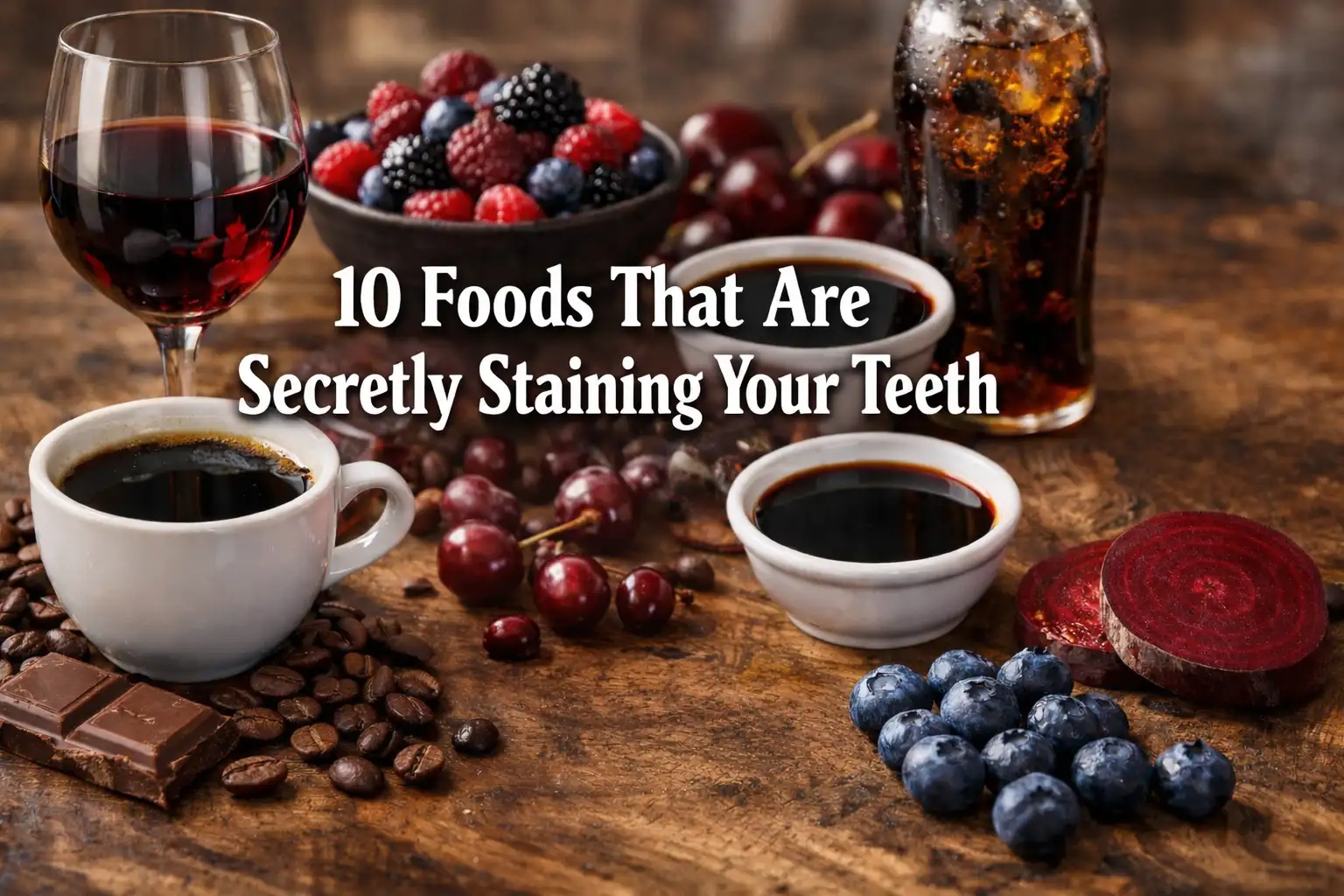
10 Foods That Secretly Stain Your Teeth
1. Coffee
Coffee is one of the most notorious culprits when it comes to tooth staining. The dark pigments in coffee, combined with its acidic nature, make it particularly damaging to tooth enamel. Regular coffee drinkers often notice a gradual yellowing of their teeth over months and years.
Solution: Use a straw when drinking coffee, rinse your mouth with water afterward, and limit consumption. Consider switching to lighter roasts, which contain fewer staining pigments than dark roasts.
2. Red Wine
While red wine may be heart-healthy in moderation, it’s terrible for your teeth. The deep red color and high acidity of red wine create the perfect storm for tooth staining. The tannins in wine are particularly staining compounds.
Solution: Drink red wine with meals, use a straw, and wait at least 30 minutes before brushing your teeth after consumption.
3. Dark Berries
Blueberries, blackberries, and dark raspberries are nutritious but staining. These berries contain powerful anthocyanins—pigments that give them their deep color and stain your teeth just as effectively.
Solution: Enjoy these healthy fruits but rinse your mouth with water afterward and wait before brushing.
4. Soy Sauce and Balsamic Vinegar
These dark condiments are innocuous additions to meals, but their deep colors can leave lasting stains on your teeth. Both soy sauce and balsamic vinegar contain chromogens that penetrate tooth enamel.
Solution: Use these condiments sparingly, rinse your mouth with water immediately after eating, and consider using a straw for liquid condiments.
5. Tomato-Based Sauces
Marinara, ketchup, and tomato sauce may be dinner staples, but they’re acidic and contain chromogens. The combination of acid and pigment makes them particularly problematic for tooth staining.
Solution: Eat tomato-based dishes with a meal rather than alone, drink water afterward, and consider pairing with cheese, which can neutralize acids.
6. Curry
This aromatic spice is beloved in cuisines worldwide, but its vibrant yellow-orange color can stain your teeth. The turmeric in curry contains curcumin, a compound that readily stains tooth enamel.
Solution: Limit curry consumption or rinse your mouth thoroughly with water immediately after eating.
7. Beets
Beets are incredibly nutritious, but their deep purple-red pigment can stain teeth significantly. The pigments in beets are particularly stubborn and can accumulate over time.
Solution: Eat beets with other foods, drink plenty of water during and after eating, and maintain regular brushing habits.
8. Dark Chocolate
While dark chocolate offers antioxidants, its deep brown color comes from cocoa solids that stain your teeth. The higher the cocoa content, the greater the staining potential.
Solution: Enjoy dark chocolate in moderation, drink water afterward, and rinse your mouth.
9. Sports and Energy Drinks
These beverages are double threats—they’re highly acidic and often contain dark coloring agents. The combination destroys tooth enamel while simultaneously staining it.
Solution: Avoid these drinks when possible, and if you do consume them, use a straw and rinse immediately with water.
10. Cola and Dark Sodas
Perhaps the worst offender, cola and dark sodas combine acidity with dark coloring pigments. They also contain sugar, which feeds harmful bacteria in your mouth.
Solution: Eliminate sodas from your diet if possible, or drink them quickly through a straw and rinse immediately.
Protecting Your Smile from Staining Foods
Daily Habits Matter
Beyond avoiding staining foods, maintaining excellent oral hygiene is crucial. Brush your teeth twice daily with fluoride toothpaste, floss daily, and rinse with water after consuming staining foods. These simple habits can dramatically reduce tooth discoloration.
Professional Teeth Whitening
If your teeth have already been stained by these foods, professional whitening treatments are highly effective. A qualified emergency dentist in Sanford, FL can recommend treatments tailored to your specific needs, whether you need quick results or gentle, gradual whitening.
Regular Dental Checkups
Visit your dentist regularly for cleanings and checkups. Professional cleanings remove surface stains that brushing alone cannot eliminate. If you’re in the Lake Mary area, a Lake Mary dentist can provide routine preventive care to keep your smile bright.
Conclusion :
You don’t have to eliminate all of these foods from your diet to maintain a bright smile. Instead, be mindful of consumption, rinse with water afterward, use a straw when possible, and maintain excellent oral hygiene. Regular professional cleanings and visits to your trusted dentist in Sanford, FL are the best defense against tooth staining.
Your smile is one of your most valuable assets. By understanding which foods secretly stain your teeth and taking preventive measures, you can enjoy your favorite foods while maintaining the bright, white smile you deserve. Remember, professional guidance from dental experts can help you navigate your dietary choices while protecting your teeth for years to come.